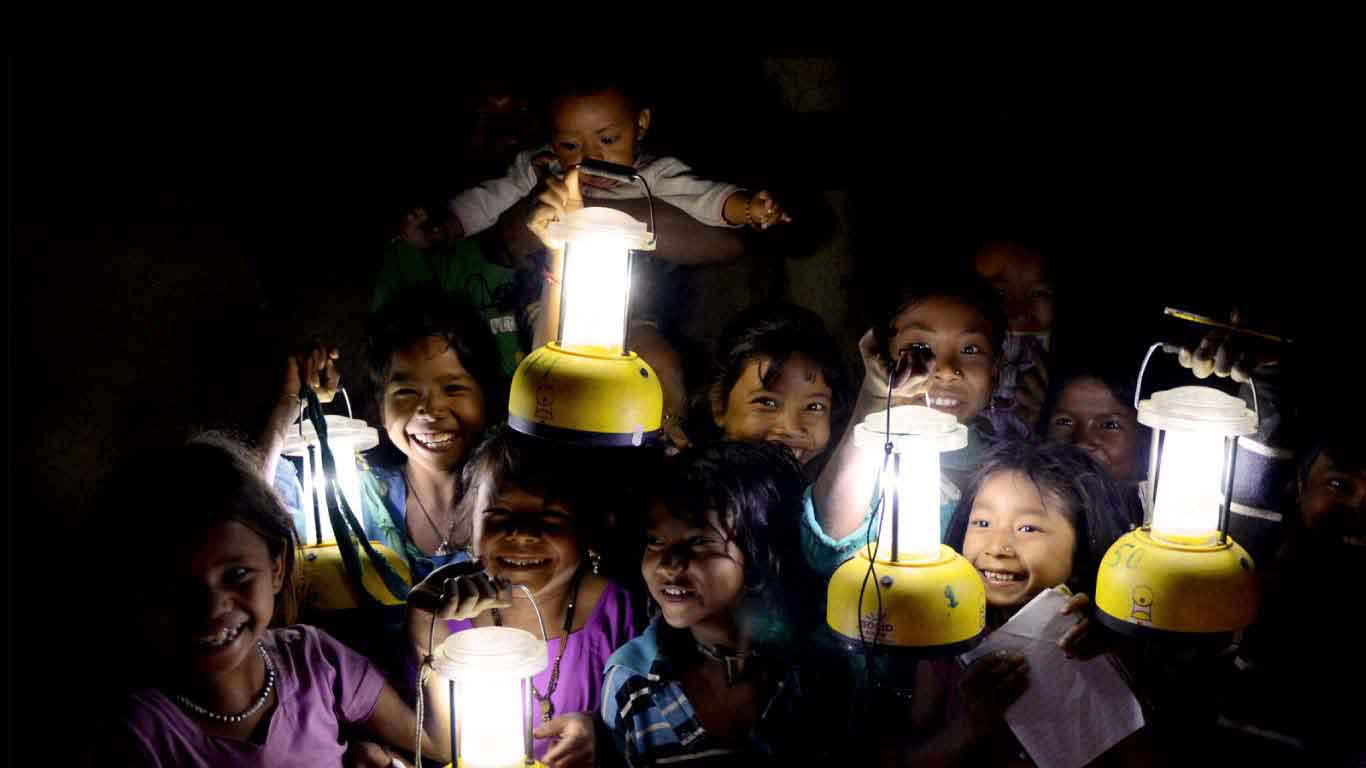
We commit to enable a Billion Lives to
accesss Light from Solar Technologies
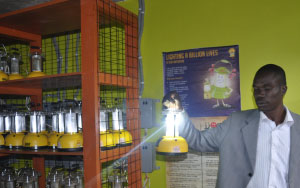
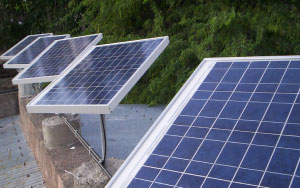
Armed with the twin objectives of providing access to clean lighting to impoverished villages and facilitating green job opportunities by promoting rural entrepreneurship, LaBL has now reached the Republic of Congo with piloting of Solar Charging Stations (SCSs) in the villages of Mayako and Mougoundou Nord districts during May 2013.
The initiative strengthened its roots through the support provided by Planet Workshops under a Memorandum of Understanding (MOU) signed during December 2011 and forming the association Lighting a Billion Lives (LaBL) France. The collaborative effort was further strengthened with the involvement of the Association for Congolese Development (ACDA), a local NGO which has been working on community development initiatives. While Planet Workshops raised funds for piloting the initiative, ACDA acted as the local implementing agency and TERI provided the technical support and training to foster South-South cooperation and expand the provision of clean lighting in the country.
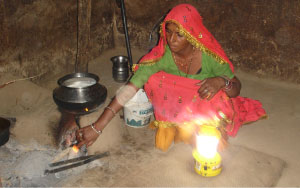
The problem of energy deficiency is grave in the Republic of Congo, with only 10 per cent of the rural households having access to electricity. The predominant source of lighting is kerosene which is an expensive proposition for the inhabitants. The lanterns rented from the solar charging stations, set up under the collaborative initiative, is expected to provide sustainable and affordable clean lighting solutions to the local community.
TERI and Horn of Africa Regional Environment Centre and Network (HoA-REC&N) organized a Technology Discussion Forum (TDF) on “Benchmarks and Standardization of Improved Cookstoves and Solar Systems in Ethiopia” in Addis Ababa on 23 May 2013. This one-day forum brought together relevant stakeholders from the Ministry of Water and Energy, Ethiopian Conformity Assessment Enterprise (ECAE), GIZ, Ethiopian Solar Energy Society, solar equipment dealers, cookstove fabricators, NGO’s, and consultants in the Ethiopian energy sector.
The Executive Director of HoA-REC&N, Dr Araya Asfaw, in his opening remarks noted that HoA-REC&N is aggressively working on sustainable and renewable energy sources for Ethiopian households with support from various partners, such as TERI and GIZ. Dr Asfaw added that “clean development is the priority of the country and therefore setting standards for cookstoves and solar lighting technologies is the need of the hour, which can contribute to Ethiopia’s growth and transformation plan and the journey towards building a climate resilient green economy”.
The workshop focused on two key components of energy access—solar lighting solutions and improved cookstoves systems. Presentations and panel-moderated discussions on: 1) the current status of quality standards and performance benchmarks for improved cook stoves and solar lighting in Ethiopia and 2) the need and ways of improving the quality control checks of solar lighting solutions and cookstoves, was held during the TDF.
The TDF concluded with participants acknowledging the importance of quality standards and performance benchmarks for solar lighting solutions and clean cookstoves and proposing to the Ministry of Water and Energy the formation of a working group, composed of the Ministry of Water and Energy, ECAE, Ethiopian Standards Agency, GIZ, HoAREC&N/TERI, and representation from solar companies and cookstove fabricators, to work on the formulation of a national minimum standard and benchmarks for solar lighting solutions and improved cookstoves in Ethiopia.
LaBL conducted a one-day training workshop at IIT Guwahati on 1 September 2012 during ‘Techniche’, the annual techno - management festival of the institute. The workshop was conducted to sensitize future engineers and leaders towards the challenges of energy access and give them an understanding of how decentralized energy systems can be means to provide access to lighting to communities in remote rural areas. Apart from students of IIT Guwahati, the workshop was also attended by participants from engineering colleges such as Assam Engineering College, Don Bosco College of Engineering and Technology, and NGOs such as Helpage India and Snehalaya Orphanage.
The programme was organized with the help of student volunteers from IIT Guwahati. It received a very enthusiastic response from the 70 young participants, who will hopefully become future ambassadors of the cause.
Uganda became the fourth country in Africa (after Mozambique, Sierra Leone, and Kenya) to benefit from the Lighting a Billion Lights campaign, with the successful establishment of six solar charging stations (SCS), each equipped with facilities for charging 100 lanterns, and a solar mobile charging facility in Kwarkwar village, Mbale district. The project was funded and implemented by Actis and Umeme (the electricity distribution company in Uganda) as part of their corporate social responsibility initiative. TERI provided technical support to foster South–South cooperation and expand provision of clean lighting in the country.
To ensure sustainability of the charging stations, TERI also provided technical training with regard to the installation, operation, and maintenance of the solar PV systems, lanterns, and mobile phone charging system to Umeme technicians during the installations. The training included instructions on trouble shooting for different faults, such as replacing fuses, circuit boards, and LEDs. As part of the initiative, TERI had also organized an exposure visit for one of the senior managers from Umeme to similar LaBL installations in Indian villages.
Armed with the twin objectives of providing access to clean lighting to impoverished villages in India and generating green job opportunities by promoting rural entrepreneurship, Ministry of New and Renewable Energy (MNRE) supported the LaBL programme to implement solar charging stations across 1000 villages spread across 17 states in India. The first phase of the project, extended from January 2010 to July 2010, provided clean lighting to around 50,000 rural households spread across 300 villages in 9 states of India. In each of these states, the project has covered both un-electrified as well as poorly electrified villages. The second phase of the project extended from July 2011 to June 2012 covering 700 villages spread across 16 states. This support was extended under the Ministry’s ambitious Jawaharlal Nehru National Solar Mission.
In sync with its aim to promote renewable energy technologies and gradually increase the contribution of renewable energy in the total energy mix, the Ministry has been offering a subsidy for individual solar lanterns and solar PV power plants. However, this project is unique and pioneering in itself as it linked solar lanterns with decentralized solar power plants through establishment of stand-alone solar photovoltaic power plant based lantern charging stations in the rural areas of India, thereby creating green jobs.