We commit to enable a Billion Lives to
accesss Light from Solar Technologies
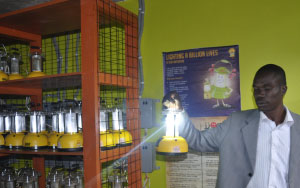
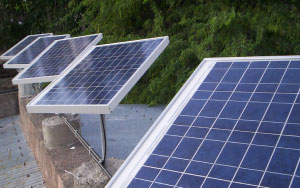
Uganda became the fourth country in Africa (after Mozambique, Sierra Leone, and Kenya) to benefit from the Lighting a Billion Lights campaign, with the successful establishment of six solar charging stations (SCS), each equipped with facilities for charging 100 lanterns, and a solar mobile charging facility in Kwarkwar village, Mbale district. The project was funded and implemented by Actis and Umeme (the electricity distribution company in Uganda) as part of their corporate social responsibility initiative. TERI provided technical support to foster South–South cooperation and expand provision of clean lighting in the country.
To ensure sustainability of the charging stations, TERI also provided technical training with regard to the installation, operation, and maintenance of the solar PV systems, lanterns, and mobile phone charging system to Umeme technicians during the installations. The training included instructions on trouble shooting for different faults, such as replacing fuses, circuit boards, and LEDs. As part of the initiative, TERI had also organized an exposure visit for one of the senior managers from Umeme to similar LaBL installations in Indian villages.
LaBL conducted a one-day training workshop at IIT Guwahati on 1 September 2012 during ‘Techniche’, the annual techno - management festival of the institute. The workshop was conducted to sensitize future engineers and leaders towards the challenges of energy access and give them an understanding of how decentralized energy systems can be means to provide access to lighting to communities in remote rural areas. Apart from students of IIT Guwahati, the workshop was also attended by participants from engineering colleges such as Assam Engineering College, Don Bosco College of Engineering and Technology, and NGOs such as Helpage India and Snehalaya Orphanage.
The programme was organized with the help of student volunteers from IIT Guwahati. It received a very enthusiastic response from the 70 young participants, who will hopefully become future ambassadors of the cause.
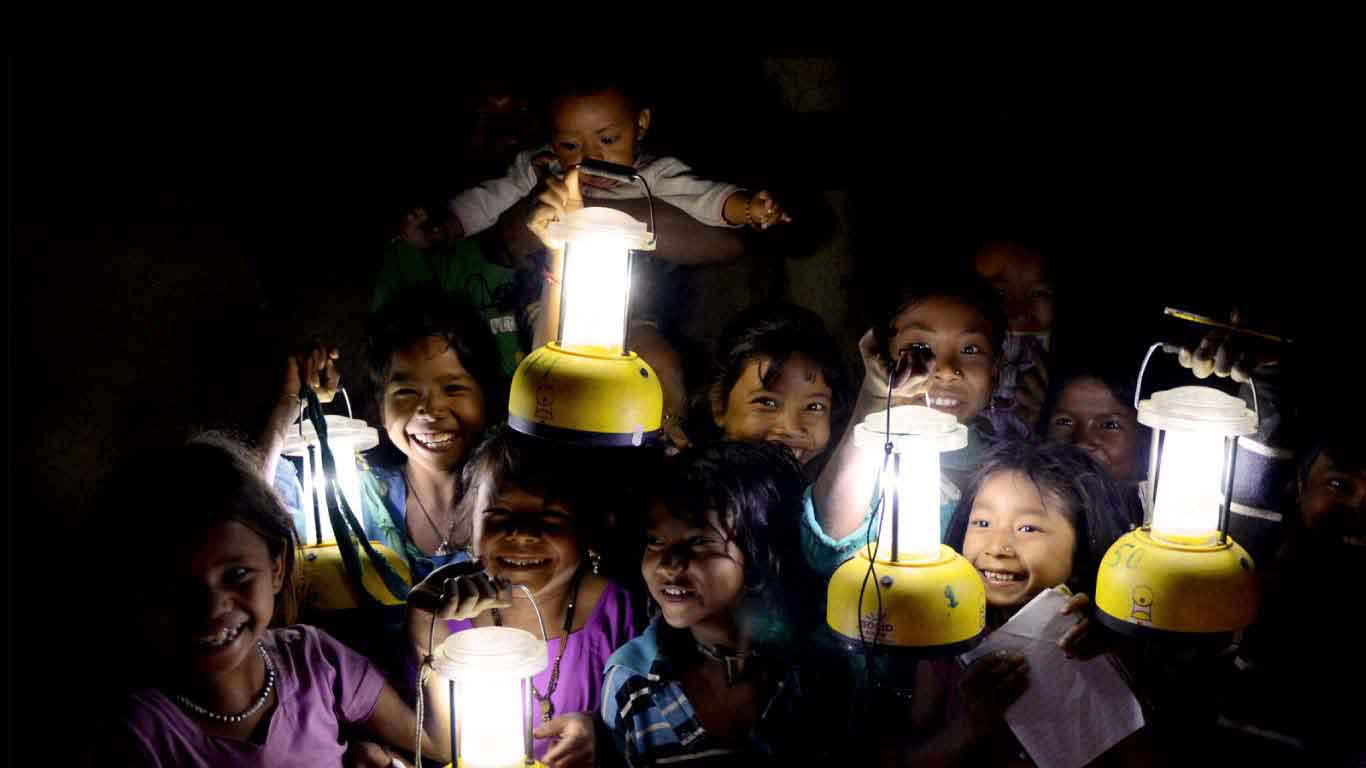
TERI and Buksh Foundation have signed a MoU to initiate “Lighting a Million Lives” project in Pakistan. The objective of the project is to provide access to clean and reliable source of lighting, to the rural population inhabiting energy-deficient areas across Pakistan, through the intervention of solar technologies. The project is also expected to qualitatively impact the lives, besides providing livelihood opportunities to the beneficiary communities.
Speaking on the occasion, Dr RK Pachauri, Director General, TERI, emphasized TERI’s resolve of fostering cross-border friendship for the larger benefit of the huge chunk of population on both sides, who are bereft of the basic necessities of life. He reiterated the need to harness the scant resources for long-term sustainability of energy and environment in the subcontinent in general; and the two countries in particular.
Buksh Foundation CEO, Ms Fiza Farhan said, “This collaborative project would usher in female empowerment in the rural areas of Pakistan and give impetus to environment awareness in the country”.
Through the initiative, Buksh Foundation would provide clean lighting at a nominal cost to people living in the rural areas of Pakistan. The Foundation has fixed a target of reaching out to 12,500 individuals spread over 400 villages across Punjab, and unelectrified areas of Sindh and Baluchistan. The number is expected to go up to 5,000 villages by the end of 2017, the estimated period for the completion of the project, by which time the Buksh Foundation endeavours to achieve the goal of “Lighting a Million Lives” in Pakistan.
Armed with the twin objectives of providing access to clean lighting to impoverished villages in India and generating green job opportunities by promoting rural entrepreneurship, Ministry of New and Renewable Energy (MNRE) supported the LaBL programme to implement solar charging stations across 1000 villages spread across 17 states in India. The first phase of the project, extended from January 2010 to July 2010, provided clean lighting to around 50,000 rural households spread across 300 villages in 9 states of India. In each of these states, the project has covered both un-electrified as well as poorly electrified villages. The second phase of the project extended from July 2011 to June 2012 covering 700 villages spread across 16 states. This support was extended under the Ministry’s ambitious Jawaharlal Nehru National Solar Mission.
In sync with its aim to promote renewable energy technologies and gradually increase the contribution of renewable energy in the total energy mix, the Ministry has been offering a subsidy for individual solar lanterns and solar PV power plants. However, this project is unique and pioneering in itself as it linked solar lanterns with decentralized solar power plants through establishment of stand-alone solar photovoltaic power plant based lantern charging stations in the rural areas of India, thereby creating green jobs.
In keeping with its vision of social responsibility to contribute towards modernization of society, Rural Electrification Corporation (REC) in 2011 made a commitment to light up 45 villages across 3 states of Assam, Madhya Pradesh and Maharashtra under the Lighting a Billion Lives initiative. The support is also in line with REC’s core business activity of financing electrification programmes in the country.
By leveraging additional funds from capital subsidy available from the Ministry of New and Renewable Energy (MNRE) Government of India, and contribution from the communities TERI was able to expand the scope of this commitment and implement 63 solar charging stations in these states.
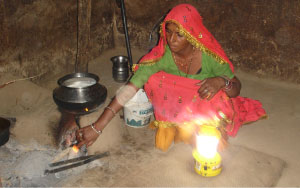
The project intends to meet twin objective of illuminating energy impoverished households across these villages with a clean energy source and also develop a self-sustainable, entrepreneurship based energy service model, wherein a trained local youth/women rents solar lamps for a nominal fee, a part which serves as his/her income while the other is used for the maintenance of the solar charging station.
Recently, a programme was organised by TERI at Gohpur in Sonitpur District of Assam to inaugurate the 13 Solar Charging Stations (SCSs), supported by REC and hand them over to the local partner organisation, Chaiduar Rural Development Centre (CRDC) for operation and management of the SCSs. CRDC will manage the SCSs involving local youths as entrepreneurs to operate and provide solar lanterns on rental basis to the community.
Earlier in April this year, Rajeev Sharma, Chairman & Managing Director, REC inaugurated and hand over 41 charging stations to the local communities in Rajgarh district of Madhya Pradesh. These stations have been implemented in partnership with District Poverty Initiative Project (DPIP), Government of Madhya Pradesh primarily involving the SHGs formed by DPIP in the district. Speaking on the occasion, Sharma said "REC finds itself very proud because it has directed its CSR funds to Rajgarh district of Madhya Pradesh through TERI to make solar lanterns available. These are not only used for providing lighting to the village community but it has resulted in women empowerment. We are very proud to be associated with TERI and will provide our support even in the future"
Bringing light that in turns leads to prosperity in villages that do not have access to electricity is one such initiative by REC that has reinforced its commitment towards building sustainable relationships with the community at large.